hyderabad deccan tours ,
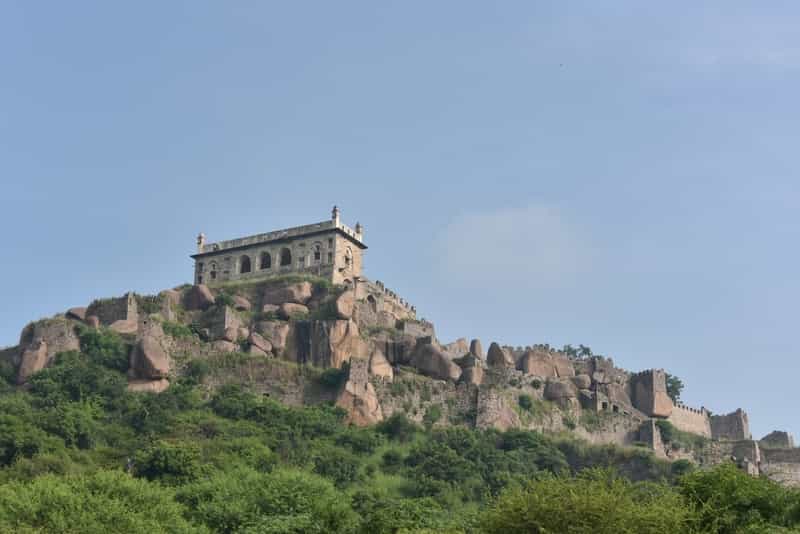
he fort that was completed in the 17th century was the stronghold of the legendary Qutub Shahi Empire. One of the best examples of the acoustic systems of the age, this Hyderabad monument still does not fail to surprise the tourists with its extraordinary architecture and style.
Quite the heart of the city’s mercantile activities, the place has forever been known to be a place of trading for the diamond merchants and other traders of gemstones.
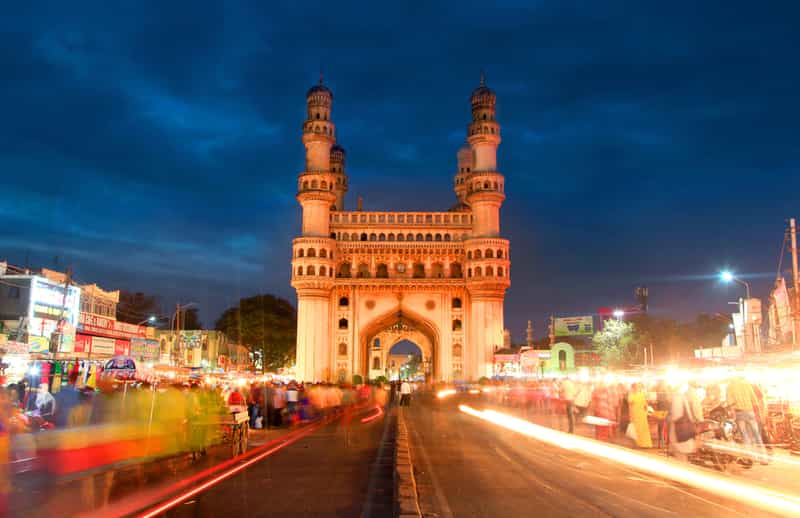
One of the most popular historical monuments in Hyderabad, the Charminar was built by Mohammed Quli Qutub Shah in the year 1951. Made of granite and lime mortar, the structure depicts the indo- Arabian architecture. It is this monument which has come to symbolize the city of Hyderabad.
The monument consists of four minarets which stand tall as the examples of the regal antiquity that the place possesses. Now surrounded by shops all around, the Charminar is a famous tourist spot in the city too.
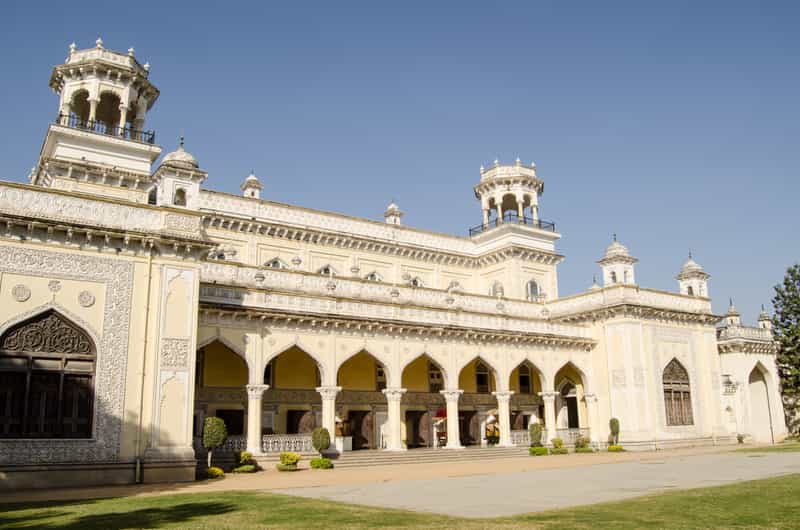
Sprawling courtyards, impeccable architecture and unending tourist footfall, the Chowmahalla Palace in Hyderabad promise it all. Though only some parts of the palace are open to the public, yet they are enough to mesmerize the tourists with their sheer charm and grace.
Believed to be the banquets for the Nizam in its time, this complex comprises for four sections namely the Mahtab Mahal, Aftab Mahal, Tahniyat Mahal and the Afzal Mahal.
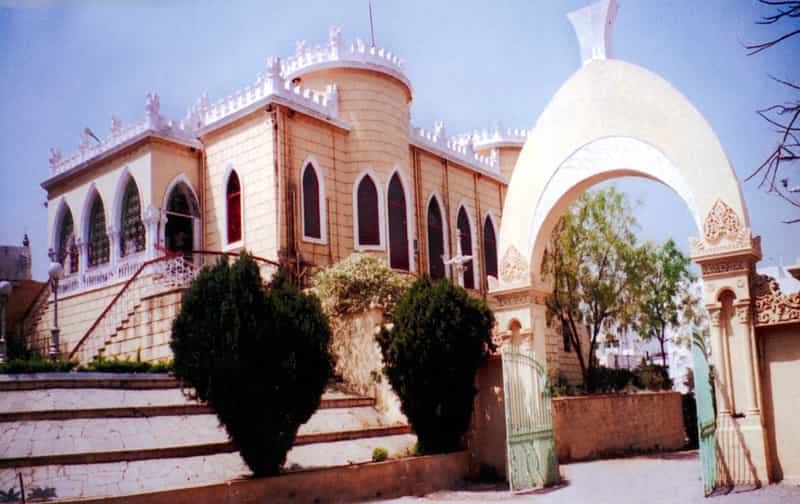
Sir Asman Jah in the year 1885 gave Hyderabad another architectural gem to boast of which is now popularly known as the Asman Garh Palace.
One of the finest models of the gothic architecture in the Indian subcontinent, this palace has the look like that of a medieval castle of Europe. The arched windows and the granite turrets are the characters of the place. This building now houses a school.
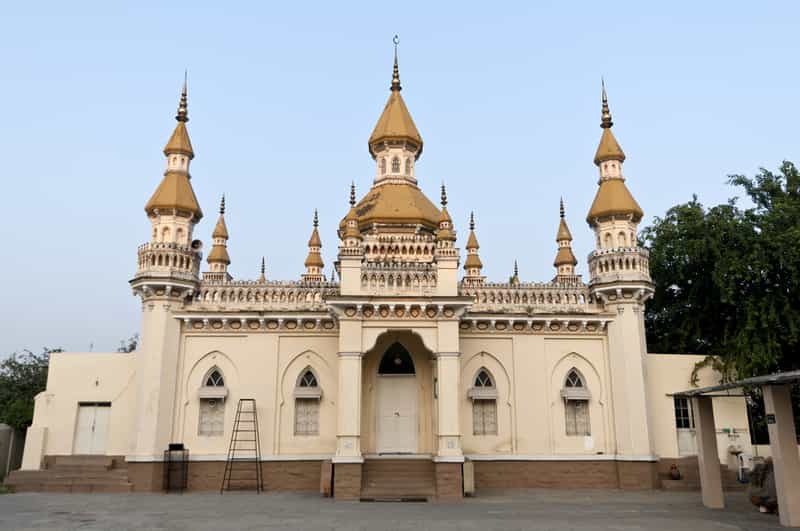
Masjid Iqbal ud Daula or Aiwan – E- Begumpet as the Spanish Mosque is also called, is among the most distinguished structures of a mosque in the country.
A construction was undertaken by the Paigah Noble, Vikhar- Ul- Umra Iqbal- Ud- Dowla, this mosque was completed in the year 1906. Owing to its differentiated Moorish architecture, the mosque is called the Mosque of the Moors.
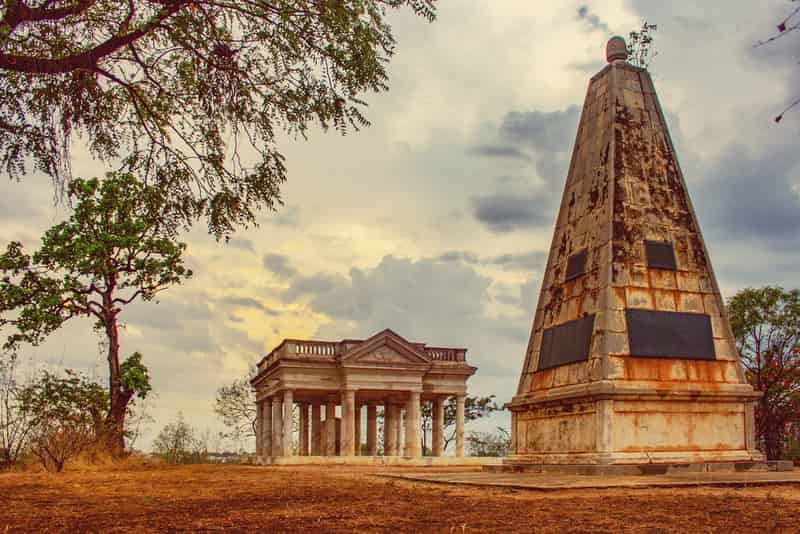
Also called the Raymond’s Tomb, Raymond’s Obelisk is a monument constructed in the memory of Michel Joachim Marie Raymond, a Frenchman who served in the Nizam army and was a good friend to the Nizam.
Quite neglected in the past, this 7m high black granite tomb is now garnering care after coming in the purview of government maintenance. This memorial is till date facilitated each year.
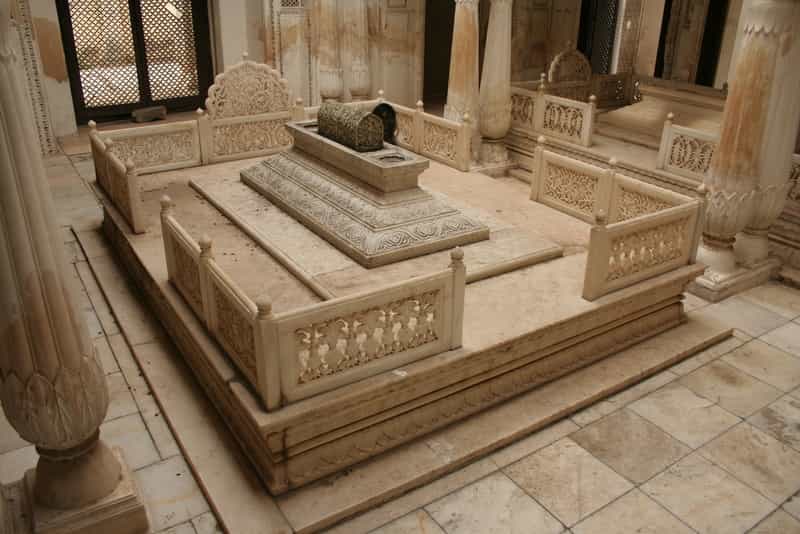
Built by one of the most influential families of the Hyderabad, after the Nizams, the Paigah Tombs were built by the Paigah family. Intricately constructed these tombs are among the best of the monuments in Hyderabad.
If the mosaic tiles are the heart of the place, the skillfully carved marble facades act as the soul. These distinguished tombs in the Pisal Banda Suburbs of Hyderabad are an exemplary show of the Indo – Islamic architecture.
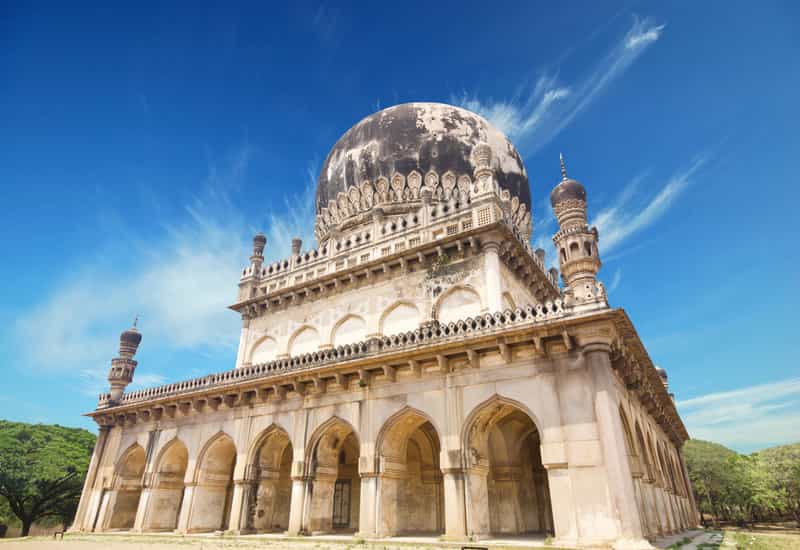
This place has quite significance in history as it is the final resting place of the Qutub Shahi rulers. Labeled to be one of the most regal tombs of the country, these tombs resemble the tombs of the Shah’s in Iran.
One of the oldest historical tombs of Hyderabad, these tombs have been built using grey granite. The building is one of the best and the unique examples of the combination of the Hindu, Persian and Pathan architectural styles.
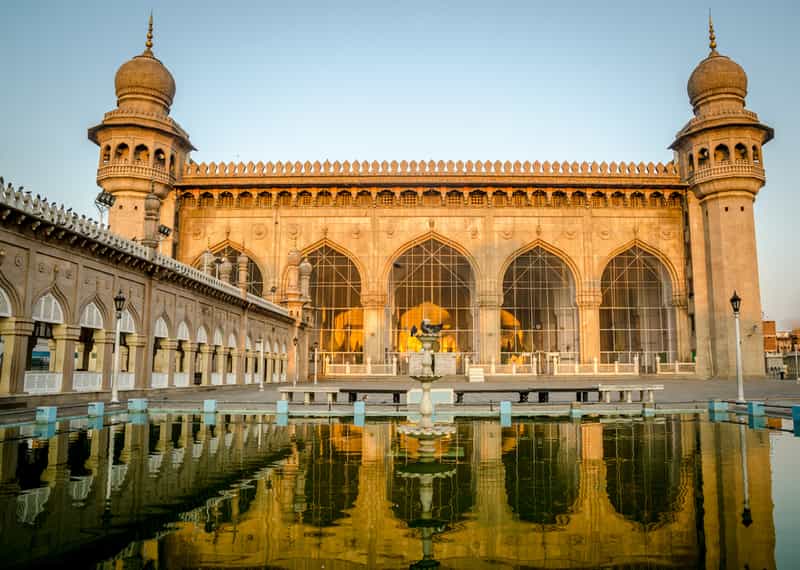
A little south west of the great Charminar, the Mecca Masjid is the biggest mosque of Hyderabad. This distinguished monument of Hyderabad took nearly 77 years to get completed.
The construction of this place which started in the reign of Muhammed Qutub Shah was stretched to the reigns of Abdullah Qutub Shah and Abdul Hasan ana Shah and finally completed by the Mughal Emperor Aurangzeb in the year 1694.
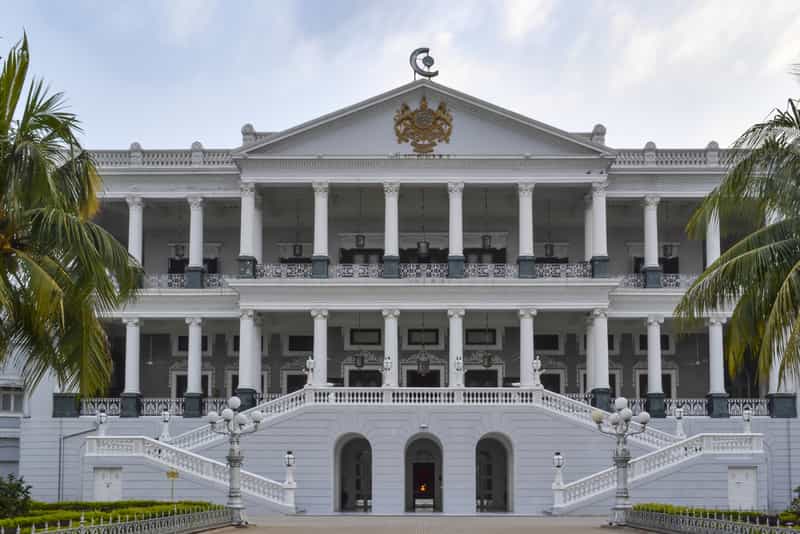
Another gift of the Paigah family to the grand layout the city of Hyderabad, the Falaknuma Palace was built in 1893. This distinguished place was built in the shape of the scorpion with two stings spread out on either side that look quite like wings facing the north.
An ideal blend of the Italian and Tudor architecture, this palace is among the rare architectural styles even today. Though built by the Paigah’s this palace was later gifted to the Nizams and now serves to be one of the most expensive hotels in India.
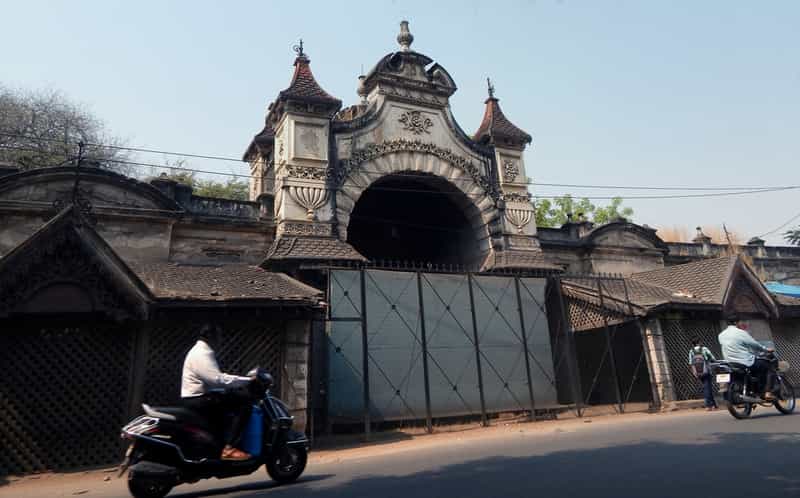
One distinguished example of the European Architectural style in India, the King Kothi was constructed by Kamal Khan, a businessman.
This splendid monument which portrays exceptional European architectural styles was later gifted to the Nizams and acted as the place of the birth and a home of the last Nizam. Canopies, handcrafted woodwork, tiled roofs, and semicircular arches form the fundamentals of this distinguished place.
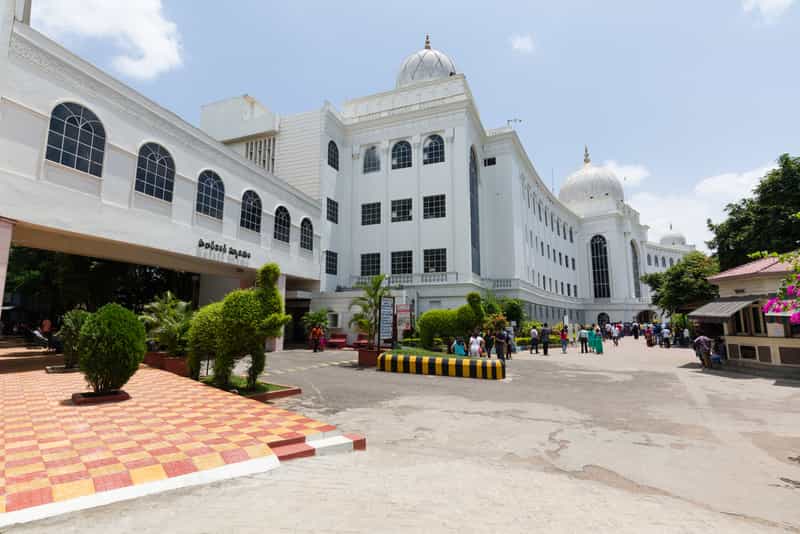
A palace in its time and now a museum to the possessions of the same family, such as the story of the Salarjung museum of Hyderabad.
The family that built the palace, the Salarjungs were a royal family of Hyderabad and have some of the grandest collections of the antique artefacts to boast of. Being one of the largest museums in the world, the spectacularity of this place cannot be undermined in any regard.
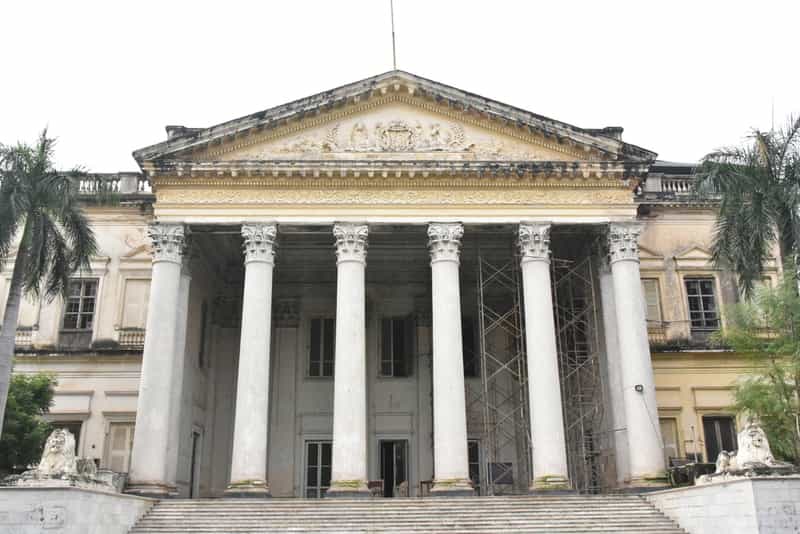
A mansion constructed by James Achilles Kirkpatrick, who happened to be the British Resident of Hyderabad between 1798 and 1805.
The British Residency acted as his home in those days and now it houses a college for women. The design of the building is like that of the White House of Washington DC.
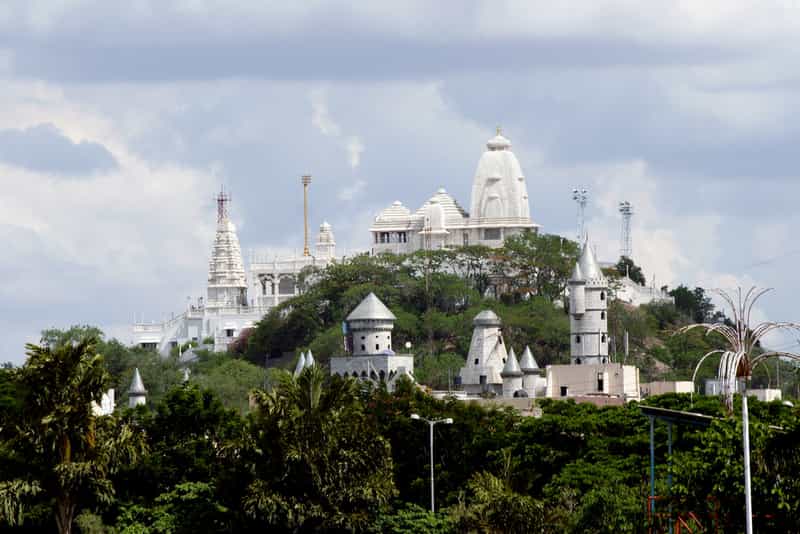
Pristine white, taller than the tallest of the city and magnificently lit, such is the splendour of the Birla Mandir of Hyderabad.
Being in south India the architecture and the structure of the temple is more or less along the lines of South Indian architectural styles. Made of the complete marble, the temple is dedicated to Lord Venkateshwara.
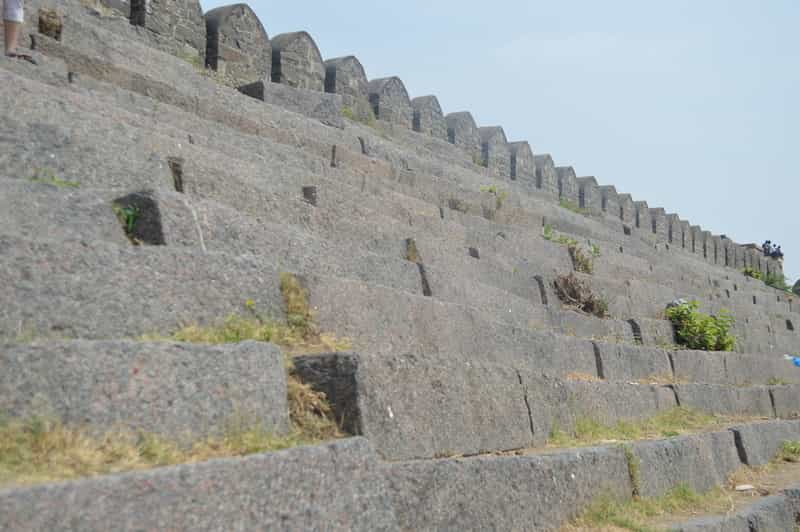
Towards the northeastern end of the city is the Warangal Fort. Again one of the famous monuments in Hyderabad, this fort was constructed by the Kakatiya Dynasty. The main highlight of this fort is the distinctly carved thoranan arches and pillars.
Quite the example of architectural brilliance this place is a complete delight to witness. One of the best features of this place are the four elephant shaped pillars each cut out of a single piece of rock and acting as the gateways to the fort.
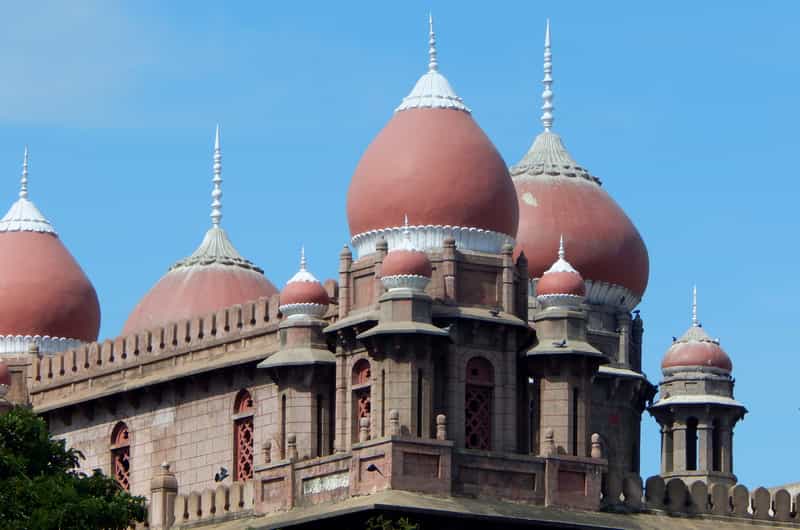
Though a legislative assembly now, the High court of Hyderabad has stood out for its exceptional Mughal style architecture since ages.
This spectacular building was built in the year 1916 by a British architect Vincent Esch and still remains to be one of the most majestic structures of the city. The highlight of this monument is the distinguished use or pink coloured granite and red sandstone in the panels of the building.
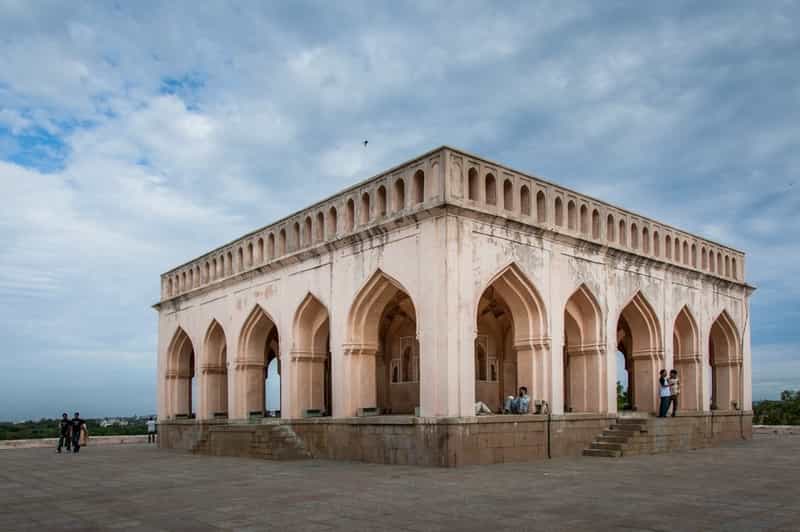
One of the most exemplary pavilions of its time, the Taramati Baradari is among the best of the Hyderabad monuments. Built by the influential Qutub Shahi ruler, Abdullah Qutub Shah, this monument was built to honour the ruler’s favourite courtesan. Taramati.
The architecture of the monument allows perfect ventilation through the 12 doors of the building and is considered to be the best of the techniques used in its time.
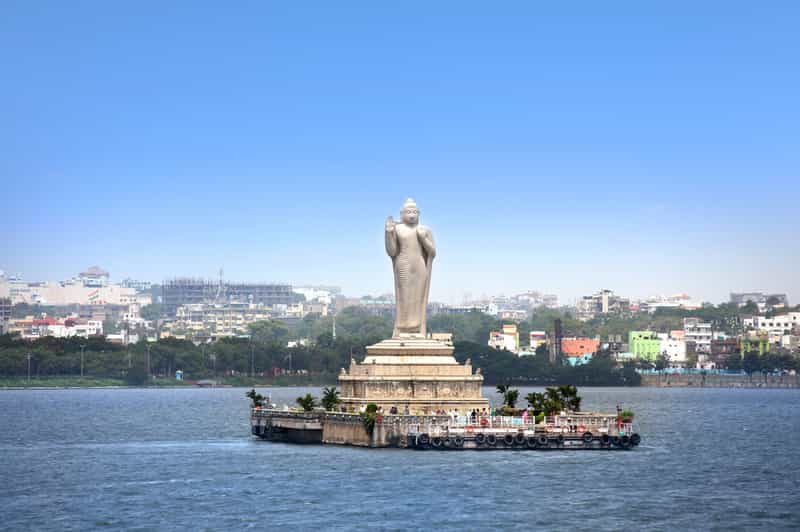
A trademark structure of the city, the Buddha of Hussain Sagar overlooks the entire city. This structure is one of the largest monolithic structures in the world and weighs about 350 tons.
This statue stands tall even today and that too right in the middle of the Hussain Sagar Lake which is a legend in the city in itself. There are many tourists who through the day drive or take a boat ride especially to witness this magnanimous statue.
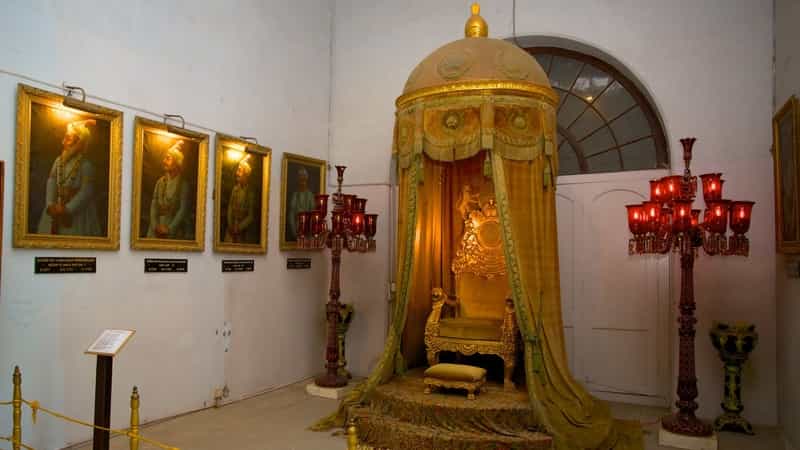
Another one of the gems of the city of Hyderabad is the architectural masterpiece that goes by the name Purani Haveli. Traditional Indian courtyards and European facades have amalgamated exceptionally to form this commendable building.
Located south-east of the Afzal Gunj Bridge, this building comprises of a single story flanked on either side by two-storied wings curated in the form of wings.


.jpeg)
.jpeg)